Engineering Hub
🔙 Back to Sensors and Actuators

Limit Switch Overview
Limit switches are electromechanical devices used to detect the presence or absence of an object, or to monitor the position of a moving part. They consist of a mechanical actuator (such as a lever, plunger, or roller) that is physically triggered by the movement of an object. When the actuator is engaged, it changes the state of an electrical contact, which can be used to control machinery, signal an alarm, or provide feedback to a control system.
How it Works
When an object presses against the actuator of the limit switch it either completes or breaks an electrical circuit. This change in the circuit can be used to stop a machine, start a process, or trigger an alarm. For example, in a conveyor system, a limit switch can be placed at the end of the conveyor to detect when an item has reached the end and stop the conveyor belt to prevent items from falling off.
Key Features
- Durability: Limit switches are designed to withstand harsh industrial environments, making them reliable for long-term use.
- Versatility: They can be used in a wide range of applications, from simple on/off control to complex automation systems.
- Cost-Effective: Limit switches are generally inexpensive and easy to install, making them a popular choice for many applications.
Operating Modes
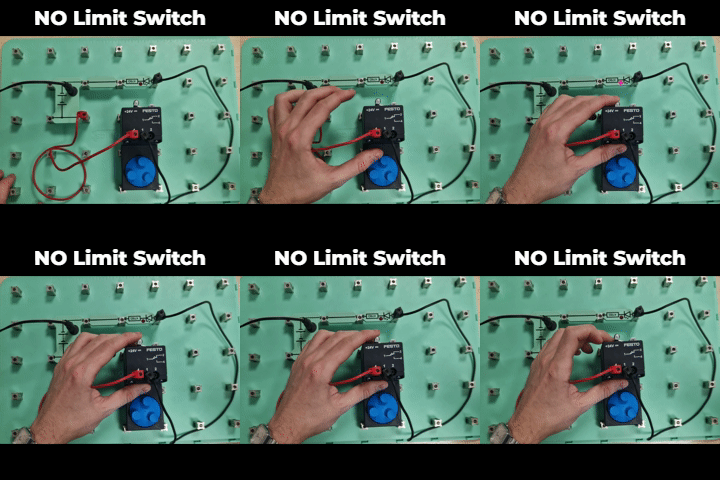
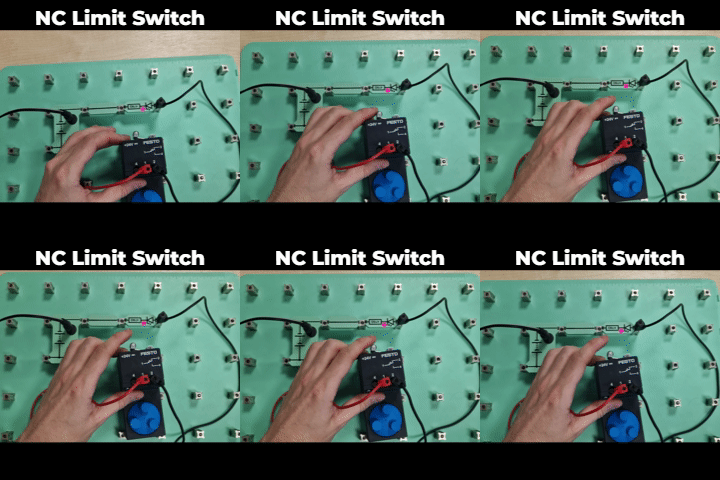
Limit switches can operate in different modes depending on the application. They can be normally open (NO) or normally closed (NC), meaning that the circuit is either open or closed when the actuator is not engaged. This allows for flexibility in how they are used within a control system. For instance, a normally closed limit switch will break the circuit when activated, which can be used for safety applications to stop machinery immediately when a certain position is reached.
Breakdown Table
| Name | Limit Switch |
|---|---|
| Sensor/Actuator | Sensor |
| Description | A device that detects the presence or position of an object by physical contact, changing the state of an electrical circuit. |
| Signal/Power Type | Electrical (ON/OFF) |
| Common Applications | Industrial machinery, conveyor systems, safety interlocks, robotics. |
What we use in college
In college, we often use a festo limit switch (Code: D:S-ESG-A-R-SIBU) in our lab setups. We typically use it to detect the position of pneumatic cylinders in our workbench setups. The limit switch is mounted in a fixed position, and when the pneumatic cylinder extends or retracts to a certain point, it engages the actuator of the limit switch, which then changes the state of the electrical circuit. This allows us to automate processes such as stopping a machine when a certain position is reached or triggering an alarm if a part is out of place.
Example Video